
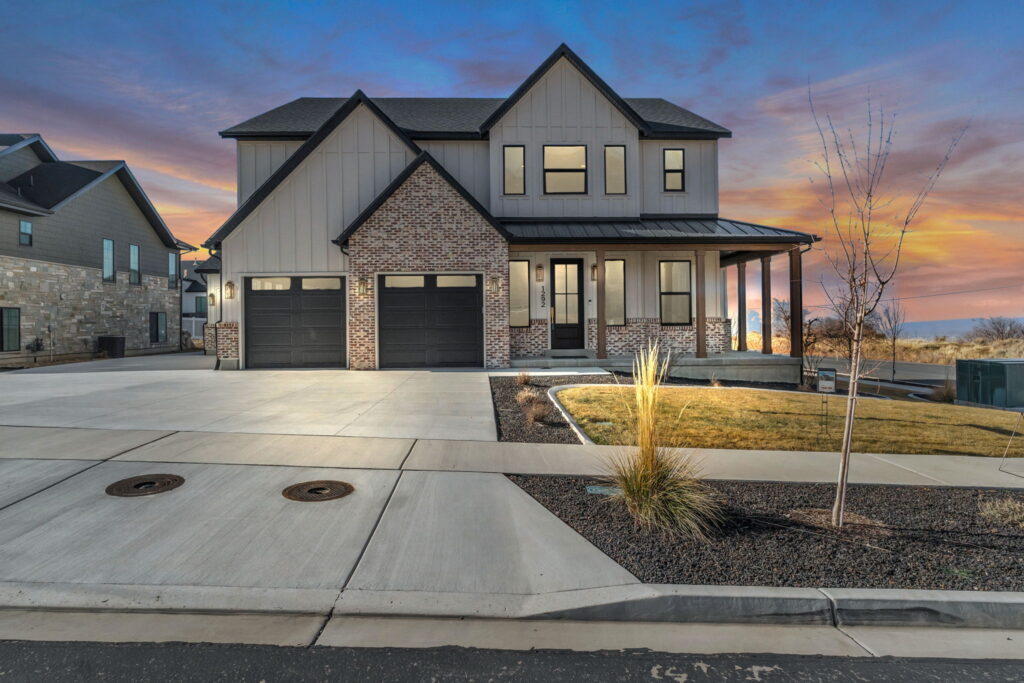
One of the most common mistakes in custom home planning is treating the construction contract price as the total project budget. It is not. A complete custom home Utah total budget breakdown covers land, site preparation, design and engineering, construction, finishes, soft costs, and contingency. Missing any of these categories produces a budget that does not reflect what the project will actually cost.
At Nova Vista Properties, we have walked clients through this breakdown as a custom home building cost Utah resource for more than 20 years. This guide covers every major budget category, what drives cost within each one, and how to structure a budget that holds up through the full build.
Why Most Custom Home Budgets Start Incomplete
Prospective clients typically arrive at their first builder conversation with a construction budget in mind. That number usually reflects what they expect to pay for the build itself. It often does not account for land, design fees, permit costs, site preparation, or the contingency that every well-planned project carries.
The gap between a construction budget and a total project budget is real. On a complex site in Utah County or a mountain terrain build in Summit County, that gap can be substantial.
Understanding the full custom home Utah total budget breakdown before design begins is what allows a builder to give you an accurate picture of what your project requires and what it will cost.
Land: The First and Often Largest Variable
Land cost is the most variable line item in any custom home budget. In Utah, land prices differ significantly across counties, cities, and site types.
A flat infill lot in an established Utah County neighborhood carries a different price than a sloped foothill parcel in the Salt Lake County bench communities. A rural lot in Wasatch County with well and septic requirements carries different total cost implications than a serviced lot in Lehi with utilities at the property line.
Beyond purchase price, land carries additional costs that belong in the budget: closing costs, transfer taxes, carrying costs during the design and permitting phase, and in some cases environmental or geotechnical investigation costs required before design can begin.
Custom home building cost Utah calculations that omit land or treat it as a separate budget entirely produce a distorted picture of what the project requires financially.
Site Preparation: The Cost Most Buyers Underestimate
Site preparation is what happens between land purchase and the first day of vertical construction. It is also where budget surprises are most common on Utah builds.
Grading and Earthwork
Sloped lots require grading to create a buildable pad. The volume of cut and fill required, the distance material needs to be moved, and whether any material needs to be exported from the site all affect earthwork cost.
For foothill sites in Draper, Spanish Fork, or Salem, and for mountain terrain parcels in Summit County, grading costs can be significantly higher than on flat valley lots. We produce a site-specific grading estimate as part of the planning phase so this cost is known before construction begins.
Retaining Walls
Slopes that exceed what can be managed with grading alone require retaining walls. Wall height, material, and engineering complexity all drive cost. Engineered retaining systems on steep mountain sites represent meaningful line items that need to be in the budget before the project is priced.
Utility Connections
Utility connection costs depend on how close existing infrastructure is to the property line. Lots in established urban areas of Provo or Orem typically have utilities immediately available. Rural parcels in Payson, Mapleton, or unincorporated Wasatch County may require significant extension of water, sewer, gas, or electrical service.
Lots requiring well and septic systems add those system costs to the site preparation budget, along with the permitting and siting analysis those systems require.
Design, Engineering, and Permitting: Soft Costs That Are Not Optional
Architectural and Engineering Fees
Architectural design fees for a fully custom home typically run as a percentage of construction cost or as a fixed fee negotiated at project outset. Engineering fees cover structural, civil, and in some cases geotechnical work required for the specific site.
For mountain terrain sites and foothill lots along the Wasatch Front, seismic design requirements and snow load engineering add to the structural engineering scope relative to simpler valley builds. These costs belong in the budget as a discrete line item, not absorbed into a general contingency.
Permitting and Plan Review Fees
Building permit fees in Utah are calculated differently across counties and cities. Utah County’s incorporated cities each set their own fee schedules. Summit County and Wasatch County have independent fee structures as well.
Plan review fees, impact fees, and utility connection fees are all part of the soft cost budget. Impact fees in particular can be significant in high-growth Utah County cities like Lehi and Orem. We confirm applicable fees for each project’s jurisdiction during the planning phase.
Construction Costs: What the Build Contract Covers
The construction contract is the largest single line item in most custom home budgets. It covers foundation, framing, roofing, exterior envelope, rough mechanical, electrical and plumbing, insulation, drywall, and the labor and overhead associated with managing those trades.
Custom home building cost Utah varies based on square footage, structural complexity, ceiling heights, roof design, and the number of special conditions the site requires. Mountain terrain sites with engineered foundations, steep-pitch roofs designed for snow load, and radiant heating systems carry different construction cost profiles than flat-lot valley builds of the same square footage.
NAHB cost-of-construction data and U.S. Census Bureau residential construction benchmarks provide general market context for construction cost ranges nationally and regionally. Those figures reflect broad averages across all housing types and should be understood as context, not site-specific estimates. What your project costs depends on your lot, your design, and your finish selections.
Finishes: The Flexible Part of the Budget
Finish selections cover flooring, cabinetry, countertops, tile, fixtures, hardware, appliances, and interior and exterior paint. This is the category with the widest range of outcomes relative to budget allocation.
Our Firm-Flex™ pricing model addresses this directly. Structural costs are fixed before construction begins. Finish selections stay flexible within a defined budget the client controls. That structure separates the cost certainty conversation from the design freedom conversation, which makes both more manageable.
Clients who understand their finish budget by category make better selections faster. They also avoid the pattern of incremental finish upgrades that push a project over budget without any single decision feeling large.
Contingency: The Budget Line That Protects Every Other Line
Every well-planned custom home budget carries a contingency. Contingency is not an expectation of problems. It is a recognition that a twelve-to-twenty-two-month project on a specific site will encounter conditions that were not fully knowable at the time of contract.
Industry practice for custom home builds typically suggests a contingency in the range of five to ten percent of construction cost, with higher contingency appropriate for complex sites, mountain terrain builds, or projects with significant site preparation unknowns.
A builder who does not discuss contingency in the budget conversation is either planning for a perfect build or planning to bill for unknowns after the fact. Neither outcome serves the client.
How We Structure the Budget Conversation
We cover all of these categories in the initial consultation. Clients who leave that conversation with a total project budget framework, not just a construction estimate, are better positioned to make every subsequent decision.
Our full breakdown of custom home building cost Utah factors is available on our site for clients who want to review cost category detail before the first meeting.
The Utah Association of Realtors publishes land value and market data for Utah County and surrounding areas that is useful context for land budget planning. U.S. Census Bureau residential construction data provides national and regional benchmarks for construction cost by project type.
For Summit County and Wasatch County builds, those counties’ planning departments publish permit fee schedules and impact fee information that belongs in the soft cost budget from the start.
Key Takeaways
A complete custom home Utah total budget breakdown covers land, site preparation, design and engineering fees, permitting costs, construction, finishes, and contingency. Missing any category produces a budget that will not hold through the project.
We bring more than 20 years of experience to this budget planning process across Utah County, Salt Lake County, Summit County, and Wasatch County. Our Firm-Flex™ pricing model locks structural costs before the build begins, which means the largest and least flexible portion of your budget is confirmed before ground breaks.
If you want to build a total project budget before committing to anything, schedule a free consultation and we will walk through every category with you.
Frequently Asked Questions
What does a custom home Utah total budget breakdown include?
It covers land purchase and carrying costs, site preparation and grading, design and engineering fees, permit costs, construction contract, finish selections, and a project contingency reserve.
What is the biggest hidden cost in a Utah custom home budget?
Site preparation is the most commonly underestimated category. Grading, retaining walls, and utility connection costs vary significantly by lot and are often omitted from early budget estimates.
How does custom home building cost Utah compare to national averages?
Utah construction costs generally track above national NAHB averages, particularly in high-growth Utah County markets and mountain terrain areas where site engineering adds to the base construction cost.
How much contingency should I budget for a custom home in Utah?
Five to ten percent of construction cost is a standard range. Mountain terrain builds, complex sites, and projects with significant site preparation unknowns warrant contingency toward the higher end of that range.
How does Nova Vista Properties help clients build an accurate total budget?
We cover all cost categories in the initial consultation, including land, site preparation, soft costs, construction, and finishes, so clients have a complete budget framework before design begins.