
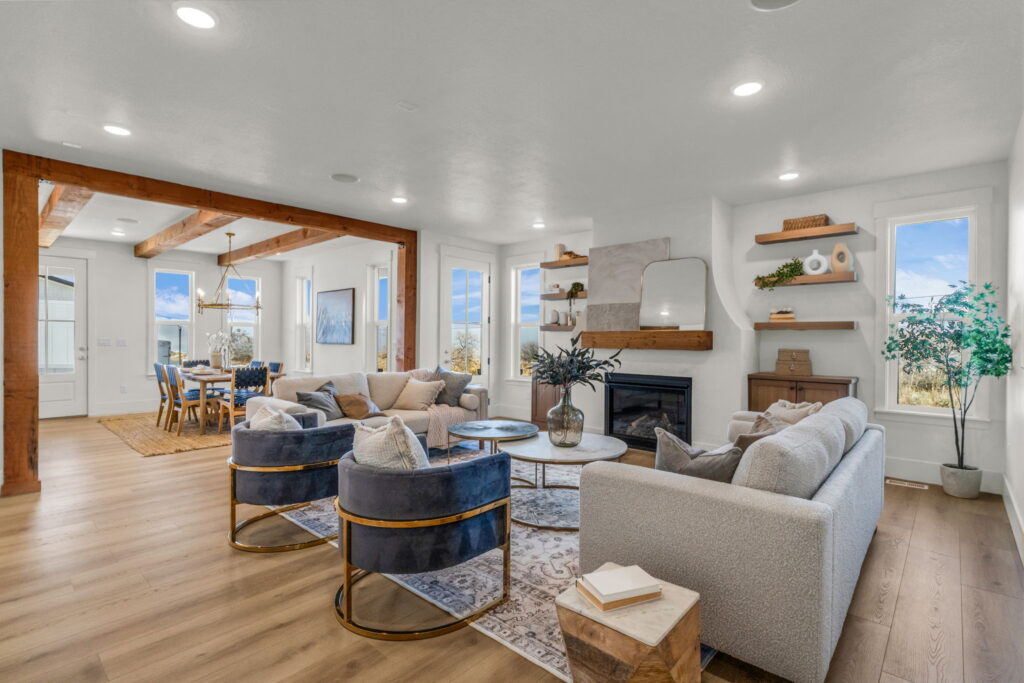
Every custom home budget depends on specific decisions and site conditions. No single average number can explain the full cost. Lot terrain, finish selections, design complexity, and utility access all shape the final budget. At Nova Vista Properties, we walk families across Lehi, Salem, Spanish Fork, Springville, and Payson through these factors. That process helps the budget reflect the real project, not a generic estimate.
Why So Many Different Numbers Exist for the Same Question
Families researching what affects custom home building cost in Utah often find a wide range of figures online. That range exists because custom homes, by definition, are not standardized products. Two homes with the same square footage can cost very differently depending on the lot, the design, and the finishes chosen.
National benchmarks can offer general context, but they cannot answer what a specific Utah County project will cost. The real answer depends on a handful of identifiable factors that apply to every custom build.
Lot Terrain and Site Conditions
Site preparation is often the most variable cost category in a custom home budget. The condition of the lot before construction even begins plays a major role in what affects custom home building cost in Utah for a specific project.
Flat and Accessible Lots
Flatter lots generally require less excavation and grading work. Site preparation costs tend to stay more contained when a parcel does not require retaining walls or extensive earthmoving before foundation work can start.
Sloped and Rocky Terrain
Sloped or rocky lots, more common in certain parts of Spanish Fork and Salem, often need additional engineering, retaining walls, or specialized excavation equipment. These site conditions add real cost before the home’s structure is even framed.
Rural Acreage Considerations
Salem and Payson include more rural parcels where land cost per acre may be lower, but properties outside municipal utility boundaries can require well drilling and septic system installation, both of which add cost beyond standard construction.
Design Complexity and Floor Plan Choices
Design decisions are one of the largest controllable factors in any custom home budget. A simple, efficient floor plan generally costs less to build than one with multiple rooflines, varied ceiling heights, or extensive custom millwork.
Complex designs require more skilled labor and longer build timelines. A family weighing what affects custom home building cost in Utah for their own project should understand that architectural complexity has a direct, measurable effect on the final number, separate from finish selections entirely.
Finish Level and Material Selections
Finish choices are often the single largest cost lever a family controls directly. Flooring, cabinetry, countertops, and fixtures can vary significantly in price depending on the product tier selected.
The same floor plan, built on the same lot, can land at very different price points depending on whether a family chooses mid-range or high-end finishes. This is the area where most families have the clearest, most direct influence over where their final budget lands.
Square Footage and How It Interacts With Other Factors
Total square footage affects overall project cost, but it does not act alone. Certain fixed-cost elements, like kitchens and primary bathrooms, do not scale directly with size, which means cost per square foot can shift depending on how a home’s space is allocated.
A smaller home with extensive custom features can sometimes cost more overall than a larger home with simpler finishes. Square footage matters, but it works together with design complexity and finish level rather than independently.
Utility Access and Infrastructure
Utility infrastructure varies across Utah County, and this factor is often underestimated when families first think about what affects custom home building cost in Utah.
Established subdivisions in cities like Lehi and Spanish Fork typically have utilities already run to the lot line, keeping connection costs more predictable. Rural parcels in Salem and Payson sometimes fall outside municipal service areas, which can require well and septic systems with their own permitting and cost considerations.
| Factor | Tends to Increase Cost | Tends to Keep Cost Lower |
| Lot terrain | Sloped, rocky, or hillside sites | Flat, accessible lots |
| Utility access | Rural sites needing well/septic | Established subdivision utilities |
| Design complexity | Multiple rooflines, custom millwork | Simpler, efficient floor plans |
| Finish level | High-end materials and fixtures | Mid-range, durable selections |
| Square footage allocation | Many smaller specialized rooms | Efficient, open layouts |
Permitting Timelines and Carrying Costs
Permit processing speed does not change construction cost directly, but it affects total project cost through carrying expenses. A longer permitting timeline means more months of construction loan interest or temporary housing costs before move-in.
Permit volume varies across Utah County depending on each city’s current growth pace. Faster-growing communities can see longer review queues during peak building season, which is a real factor for families budgeting a full project timeline.
Material Market Conditions
Material pricing shifts over time based on broader national supply and demand conditions, which affects what affects custom home building cost in Utah at any given point. Lumber, steel, and other key materials can fluctuate based on factors entirely outside a builder’s or family’s control.
Nova Vista Properties accounts for current material pricing during the planning phase rather than relying on outdated cost assumptions, which helps families get an accurate picture grounded in real market conditions at the time of their specific project.
Trade Availability and Labor Conditions
Subcontractor availability also shapes cost, particularly in high-growth communities. Established markets like Spanish Fork and Springville tend to see steadier trade availability due to longer-standing construction activity, while newer growth areas sometimes face higher demand for labor relative to supply.
Nova Vista Properties manages trade relationships and scheduling directly, which helps offset some of these pressures regardless of which Utah County community a family chooses to build in.
How Nova Vista Properties Brings Clarity to These Factors
The Firm-Flex™ pricing model used by Nova Vista Properties is built specifically to address what affects custom home building cost in Utah in a structured, transparent way. Structural costs are fixed once the planning phase is complete. Finish budgets are defined using realistic product costs rather than vague allowances that look attractive early but shift later.
This structure means families understand exactly how each factor, from lot terrain to finish selections, contributes to their specific project’s final number. Families can review the broader pricing approach on the custom home building cost in Utah page, and the full planning process on the custom home builder Utah page on the Nova Vista Properties website.
What Local and National Data Adds to the Picture
According to U.S. Census Bureau new residential construction data, construction costs vary meaningfully by region nationwide, driven by labor markets, material availability, and site conditions, a pattern that mirrors what shows up across different Utah County communities.
Reviewing Utah County and city-level planning department resources can also help families understand zoning requirements and utility infrastructure maps specific to a target city before finalizing a lot decision.
The Utah Association of Realtors tracks regional value trends that can help families understand how location-specific factors affect long-term property value alongside the initial building cost.
Getting an Accurate Picture for Your Specific Project
Understanding what affects custom home building cost in Utah in general terms is a useful starting point, but a real budget requires a site-specific evaluation. The factors covered here interact differently depending on the actual lot, design, and finish package a family has in mind.
Nova Vista Properties evaluates these factors directly during the initial consultation for every project across Lehi, Salem, Spanish Fork, Springville, and Payson. Families leave that conversation with a clear understanding of how their specific situation maps to a realistic budget.
Families ready to get a project-specific cost picture can schedule a free consultation with Nova Vista Properties to talk through the factors that matter most for a particular site and design.
Frequently Asked Questions
What affects custom home building cost in Utah the most?
Finish level and design complexity typically have the largest impact, since families control these choices directly. Lot terrain and utility access also play a significant role, especially on rural or sloped sites.
Does lot location within Utah County affect building cost?
Yes. Terrain, utility access, and site preparation requirements vary by area. Rural parcels in places like Salem or Payson may need well and septic systems that established subdivision lots do not require.
Can design choices reduce custom home building costs?
Yes. Simpler, more efficient floor plans with fewer rooflines and less custom millwork generally cost less to build than highly complex designs, even at the same total square footage.
Why do material costs affect what a custom home costs to build?
Material pricing fluctuates based on national supply and demand conditions. Lumber, steel, and other key materials can shift in cost, which directly affects overall construction budgets at any given time.
How can I find out what affects the cost of my specific custom home project?
The most reliable approach is a site-specific consultation. Schedule a free consultation with Nova Vista Properties to review your lot, design goals, and finish preferences for a real, project-specific picture.
Understand the Factors Before You Set a Budget
What affects custom home building cost in Utah comes down to a clear set of identifiable factors: lot terrain, design complexity, finish level, utility access, permitting timelines, and current material market conditions. None of these operate in isolation, and all of them interact differently depending on the specific project.
Nova Vista Properties applies the Firm-Flex™ pricing model across every project in Lehi, Salem, Spanish Fork, Springville, and Payson, breaking these factors down clearly so families understand exactly what shapes their specific budget.
If your family wants a clear, honest picture of what these factors mean for a specific project, schedule a free consultation with Nova Vista Properties and start with real answers instead of general assumptions.